The Township’s audited financial statements have brought consolidated net debt back into the public discussion.
At council, Councillor Blair Whitmarsh raised the number directly, asking whether it mattered that consolidated net debt was increasing and appeared to be among the highest in Metro Vancouver. His question was also the practical one for residents: what does this mean for homeowners?
Staff appeared to keep the discussion within the limits of the financial statements, rather than give council a broader interpretation of what the number may mean for taxes or future budgets.
According to the Township’s 2025 financial statements, consolidated net debt increased by $122.7 million, reaching $131.2 million as of December 31, 2025. The report connects the increase to the acquisition of tangible capital assets, meaning the shift is tied largely to infrastructure and facilities rather than ordinary day-to-day spending.
This net debt position means the Township’s financial liabilities are larger than its financial assets, not that the Township owes more than it owns overall.
The Township may own more roads, parks, pipes, buildings, and other long-term valuable assets, but these are also not the same as cash or investments available to meet financial obligations.
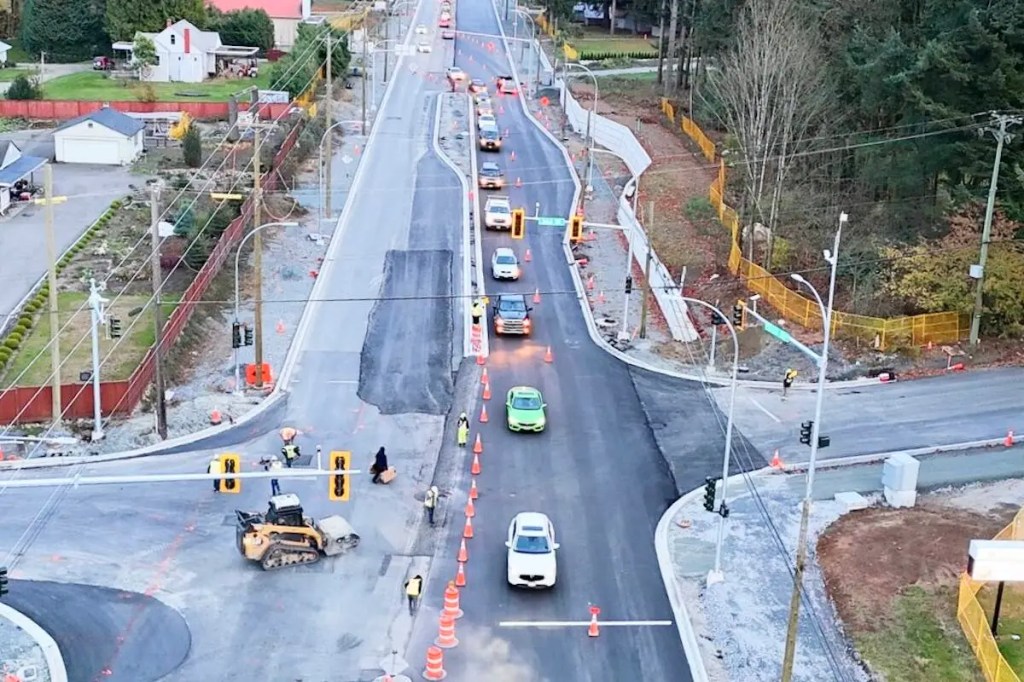
That is where the political context matters. Mayor Eric Woodward and Progress for Langley have placed emphasis on roads, parks, facilities, and addressing the infrastructure deficit through growth. Infrastructure is needed in a fast-growing municipality. The question is how much financial flexibility is being used while that program is being delivered.
Councillor Michael Pratt then raised Development Cost Charges, pointing to the way DCCs appear as a liability in the consolidated statement of financial position. The point is relevant, but limited.
DCCs are collected from developers to help pay for growth-related infrastructure. They can help fund roads, drainage, sewer, water, parks, and other eligible projects. When the Township receives or is owed that money, it also carries obligations to use it for those purposes.
That can make the balance sheet less intuitive. If money is collected for a future road, the Township may have the money, but it also has an obligation connected to that road.
Mike Parker, Independent Council Candidate for 2026 Township of Langley election, used a lemonade stand example to explain this: if someone gives you money to buy a sign, you may have the cash, but you also owe the sign. Restricted money is not the same as general financial flexibility.
That is why DCCs only help to explain part of the financial statement. They are not general-purpose funds council can use to cover unrelated budget pressures.
Parker also referred to a graph comparing Langley’s net debt with other B.C. municipalities, suggesting the Township was at the bottom of the province.
Langley’s net debt position worsened in 2025, while the Township continues to promote major infrastructure delivery as the answer to growth.
The concern here is not whether Langley needs roads, parks, utilities, and facilities. It does.
If Woodward’s council wants infrastructure delivery to be central to its record, the public may also expect a clear explanation of what that delivery means for future taxes, borrowing room, and budget flexibility.



 The Langley Monitor
Leave a comment