
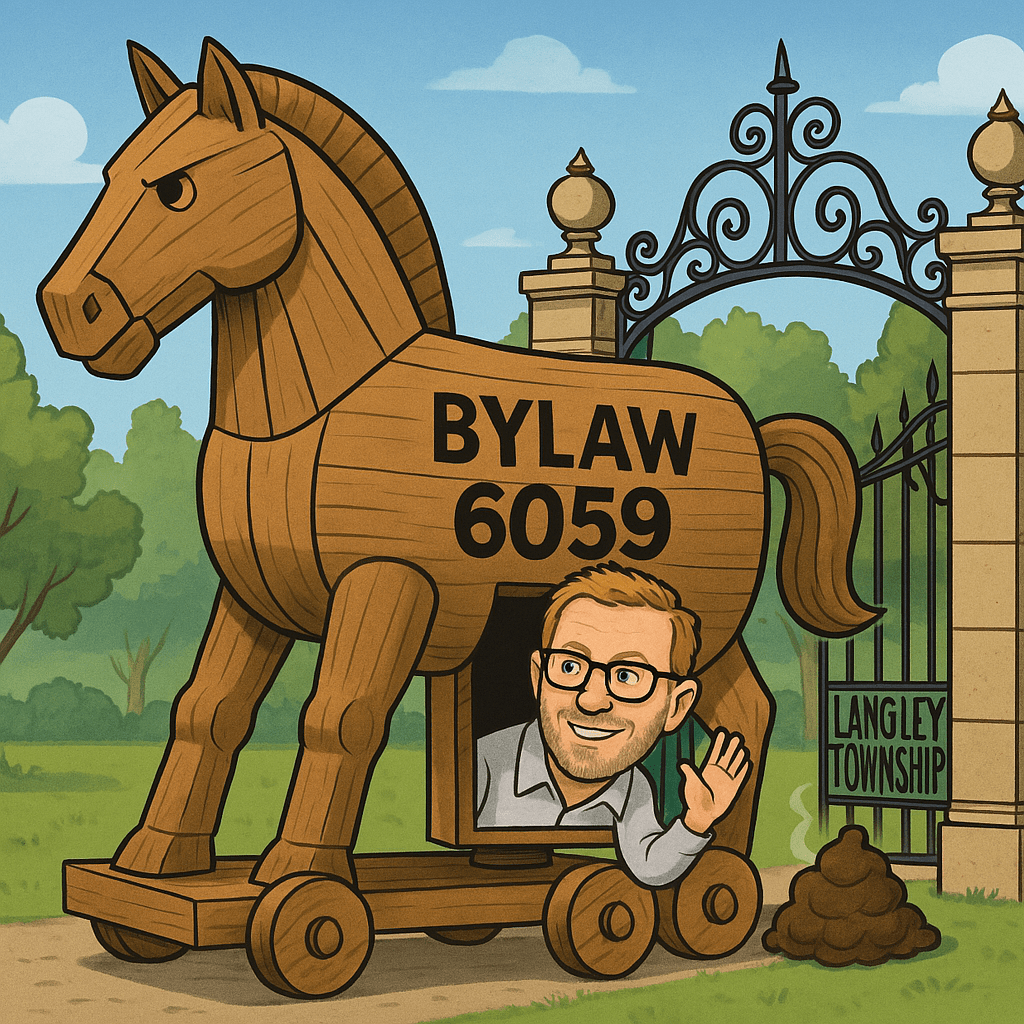
On the surface, it all seemed to be about dogs and horses.
Langley Township’s new Public Spaces Bylaw 6059 arrived at Council last month dressed in familiar language about cleaning up after pets, banning ponies from park trails, and protecting children from rogue piles of dog poop. Councillor Baillie even conjured up the threat of children contracting “flesh-eating disease” from exposure to uncollected dog waste. But as the dust settled, something else stepped out from behind the curtain: a significant shift in how decisions are made about public events and the use of shared outdoor spaces. While the bylaw talks a lot about droppings, the real threat is what’s being pushed through with stealth in the body of the bylaw.
Following consideration at the April 7 council meeting, the bylaw is scheduled to return for discussion and possible final adoption on April 28. Animal lovers may have breathed a sigh of relief when the horse ban was removed in response to a public outcry, but that headline-grabbing clause may have distracted from what is the bylaw’s main feature: a quiet transfer of authority over public event permitting.
Bylaw 6059 gives decision-making power over permits for public events in Township parks and open spaces to a single administrative office. In effect, it centralizes this authority in the Director of Engineering and Public Works.
Also, under the existing Public Spaces Bylaw 2018 No. 5298, applicants denied a special event permit could submit a written appeal to Council within 14 days. That appeal provision has been removed in the proposed new bylaw. Rendering the administrator’s decision final without the possibility of reconsideration.
Bylaw 6059 removes the ability for residents or event organizers to appeal public space permitting decisions to Council, the elected representatives who are supposed to advocate for their constituents. If this change is approved, it allows decisions about large public events to be made without transparency or accountability.
Supporters of the bylaw say it will streamline approvals and make the system more efficient. But, in fact, it eliminates oversight and institutionalizes discretionary decision-making without the checks and balances of elected representatives. That shift might seem harmless until someone wants to hold an event that runs afoul of certain interests and objectives.
Imagine a private property zoned for 100 people that would be proposed to host a 4,000-person fundraiser. Under current rules, approval of such a large number of people moving to and from the location would require Council consideration and input. Under the new framework, an administrative green light is all that’s needed.
Public discussions have so far focused on animal access: the ongoing ban on dogs in sports fields, and the now-removed clause that would bar horses from public parks. The latter caused swift backlash from Langley’s equestrian community, who saw it as an unnecessary restriction in a community that prides itself as “The Horse Capital of BC.” Council quickly responded by removing the clause before the bylaw received first reading on March 24.
This red herring may have served its purpose as a distraction. While residents were rightly occupied with defending trail access, the more impactful changes to public space governance were moving forward quietly. It may also have been part of the plan all along; to remove the clause to give the appearance of actually listening to the public.
The continued dog ban, particularly on sports fields, has been framed as a safety issue, supported by references to risks of infection and maintenance concerns. Dog owners find the rule to be severe and strict. Still, one can imagine that those managing multi-million dollar sports fields might prefer a clean perimeter. Especially when those same fields are poised to receive a massive injection of public funding, as recently reported.

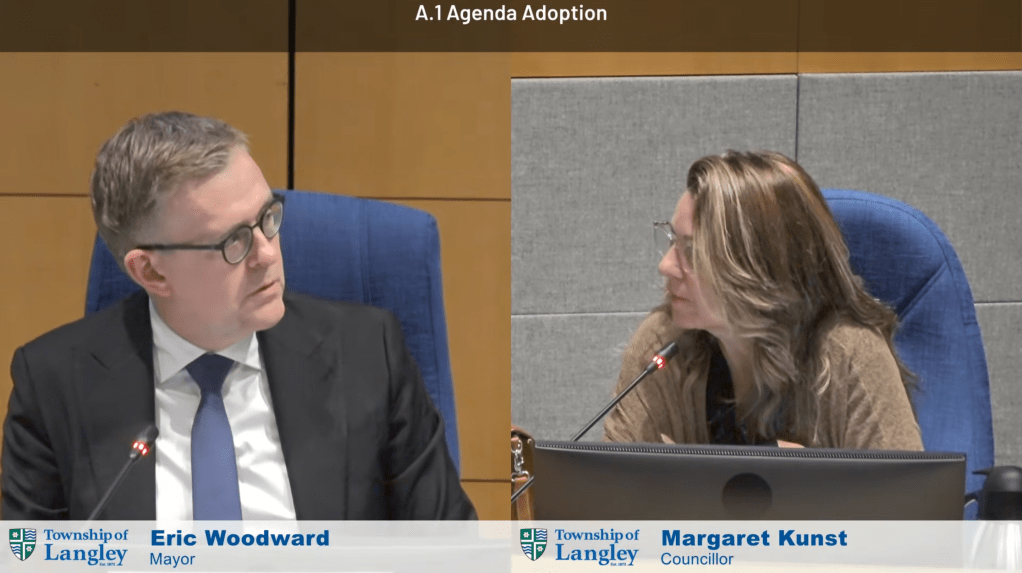
When Council returns to the matter on April 28, they must debate more than signage and cleanup rules. There ought to be questions about the role of the administrator, the loss of Council oversight, and what mechanisms, if any, exist to challenge staff decisions made under the new framework. Some councillors may want to reintroduce limited oversight or reporting requirements to ensure that major decisions are made in the open.
A companion amendment, Bylaw 6060, will also be discussed. It updates the Township’s fine structure and enforcement provisions, allowing bylaw officers to issue penalties for violations under the new rules. Combined, Bylaws 6059 and 6060 create a system where regulation, enforcement, and permitting are all consolidated under staff control.
Langley Township’s Public Spaces Bylaw is not just an update to leash laws and park etiquette. It’s a structural change in how decisions about public space are made, and by whom. And while everyone agrees parks should be clean, safe, and welcoming, the question remains whether giving all authority to a single administrator serves the community best—or just expedites permitting of certain events for certain people.
Because when you lead with a load of horse manure, people may not notice the less controversial regulations that follow.



 The Langley Monitor
Leave a reply to Rosalie Turcotte Cancel reply