
Mayor Eric Woodward has made statements about speeding up building permit processing as a way to increase housing affordability. In a March 2025 Township statement, he said it is “so important to cut down the red tape and delays to reduce costs for homes” and promised the Township will “keep doing everything we can to speed things up even more.”
The 2025 year-end stats do not show us whether permits got approved slower or faster, but they suggest the housing pipeline may have shrunk: total permit value rose to about $1.02B, while permitted dwelling units created fell 14.9 percent. There were 2,493 recorded in 2024 to 2,121 in 2025, down 372. If the goal is affordability through more homes getting built, this would seem inconsistent with that objective.
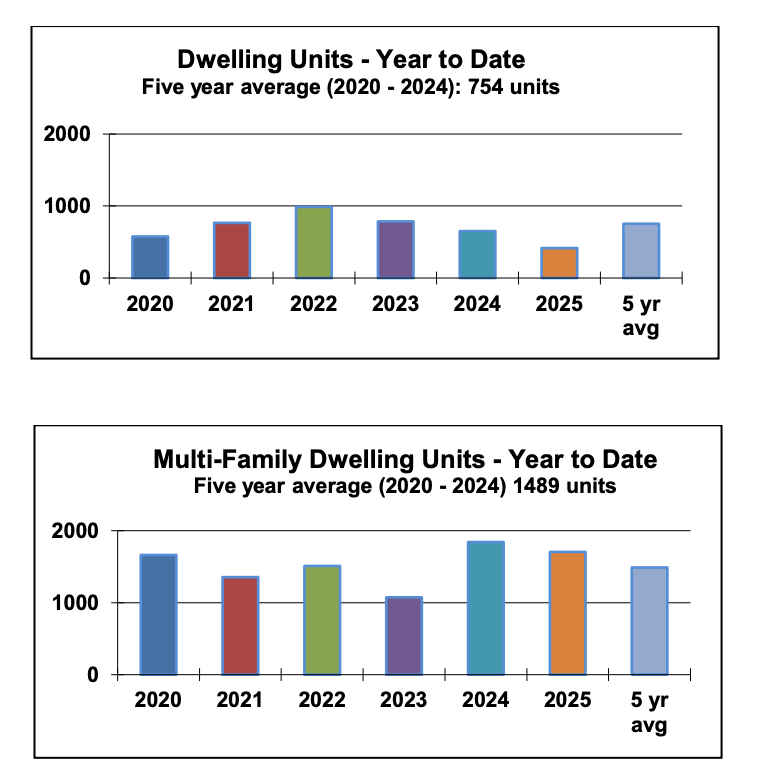
Woodward has made statements linking permit timelines and fewer delays with housing costs. But the Township’s numbers show fewer homes were permitted than in 2024.
Langley is approving fewer homes at a time when Metro Vancouver’s housing affordability pressures are increasing. Metro Vancouver’s February 2025 housing data report identifies a significant gap in affordable rentals. This same report estimates the region needs 11,400 new affordable rental homes each year.
Approvals are where housing supply begins. When the number of units permitted falls in a growing municipality, the pressure does not disappear. It can strain the rental market and increase competition for existing units, which can put upward pressure on prices.
As for the permit value, the $1.02B figure is not strictly a housing number. It’s a dollar total for all permitted construction. It can rise even when fewer homes are approved.
Permits are not rents. Permits are not sale prices. They can indicate future construction activity, but permit value is commonly treated as a weaker signal for future housing supply, with unit counts used as a clearer indicator.
As a rapidly growing municipality, approving fewer homes makes it harder for housing supply to keep up with population growth. That appears to be the opposite direction of what would typically be expected if the goal is to relieve pressure on home prices and rental rates.
More people, yet fewer approved homes raises questions about how this aligns with Woodward’s stated goal of increasing affordability. Where are all those new residents supposed to live when the Township is approving fewer homes each year?




 The Langley Monitor
Leave a comment