
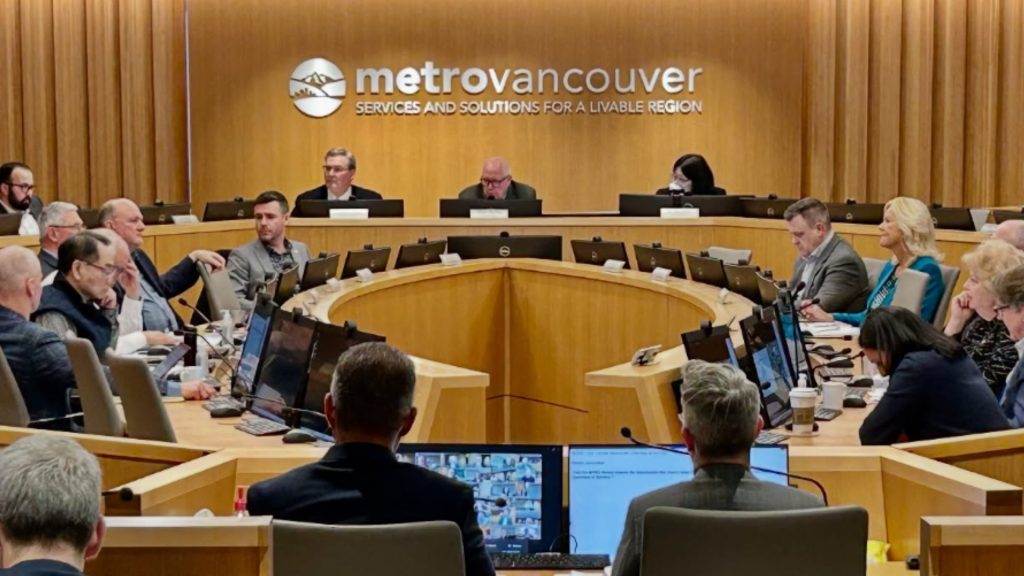
Developers are lining up to push back on Metro Vancouver’s latest Development Cost Charge (DCC) hike, which was approved by the Metro Vancouver board, of which Mayor Eric Woodward is a member.
Langley is being asked to deliver more housing, including rentals. Fees that hit at the permit stage can affect whether projects proceed, which is why the regional increases matter locally.
A DCC is a one-time fee applied to new construction, usually collected when a project gets a building permit or creates new lots. Metro Vancouver uses DCCs to help pay for growth-related infrastructure, including regional water, sewer and drainage systems, and regional parks.
Former MLA Jas Johal has shared letters from developers warning that Metro Vancouver’s regional DCC increases are hitting a weak housing market and making projects harder to finance. EDGAR Development and Qualico both point to approximately $14,000 per apartment unit in added charges by 2027. What they are asking for is clear: reverse the Jan. 1 rate increase, freeze any remaining escalations, and provide more transparency on how the numbers were decided.
The dispute is about scale and timing. Metro Vancouver adopted a three-step phase-in plan implementing increases on Jan. 1 of 2025, 2026, and 2027, and it also introduced a new regional parks DCC, a fee meant to help pay for buying land for regional parks as the population grows.
A Metro Vancouver commissioned Coriolis report estimated this change would add about $11,360 to $14,657 per apartment unit by 2027, depending on which Metro sewer service area the project is in. In the Vancouver sewerage area, the total Metro DCC on an apartment rises to about $20,906 by 2027 (up from $6,249 before the phase‑in).
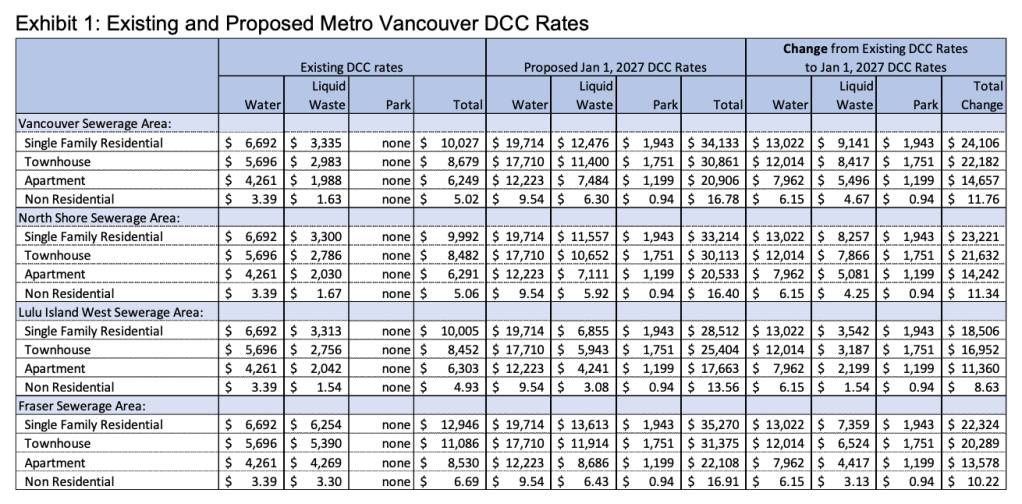
Why does that matter for affordability? Because DCCs are paid up front, before the first unit is sold and before the first tenant moves in. From a developer’s perspective, if you stack enough early costs onto a project, it no longer makes financial sense. Projects get shelved, and new housing approvals slow.
So, what is the institutional connection between the DCC increase and Mayor Eric Woodward’s role on the Metro Vancouver board? Metro Vancouver is governed by a board of municipal directors, and public records show Woodward serves on that board.
The timing is significant for Langley. In June 2025, the BC Supreme Court ruled the Township of Langley’s Community Amenity Contributions (CAC) policy was invalid. CACs were the Township’s old system of collecting extra payments from developers during rezoning deals to fund things like parks and community amenities. According to the Langley Advance Times, Woodward was reported to have described the ruling as a “nothingburger” and said, “All municipalities are switching to Amenity Cost Charges.” The Langley Advance Times also reported he planned to recommend an appeal. However, the Township of Langley has continued to postpone its own Amenity Cost Charges (ACC) policy.
Metro Vancouver says it is revising its DCC program through 2027, with new rates expected to take effect in 2028. But the next step in the current schedule is still set for Jan. 1, 2027 unless directors change course.
Langley residents do not vote on Metro bylaws directly; they do vote for the people who sit at that table. Woodward was a member of the Metro Vancouver board at the time the board adopted the DCC increase plan. So with another scheduled increase ahead, Metro’s DCC decisions and Langley’s representation on the board will be worth tracking.


 The Langley Monitor
Leave a comment