
In our recent review of the Township’s capital plan, more than one-third of new projects were identified as lacking full funding. The largest gap appears in the area of water infrastructure. Pipes, reservoirs, and mains are the backbone of a reliable system, yet in the 2025 plan many remain without confirmed financing.
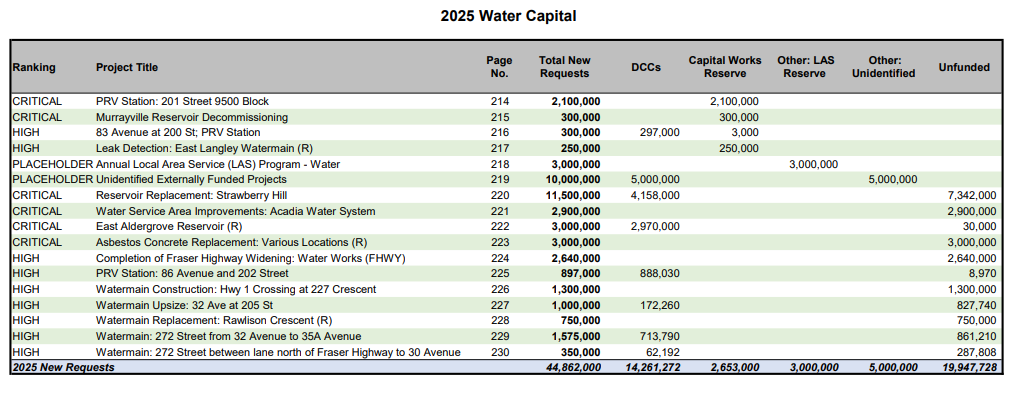
According to the Township’s figures, $44.8 million in new water projects are proposed, with nearly $20 million currently unfunded, about 44%. These are not discretionary projects. They include works Township engineers have classified as critical. The Strawberry Hill reservoir replacement, for example, has more than $7 million unfunded. Planned upgrades to the Acadia water system have no allocated funding. Replacement of asbestos-concrete mains, aging and brittle infrastructure from an earlier era, also remains without confirmed dollars. Even the Highway One watermain crossing at 227 Crescent, a key connection, is listed without secured funding.
Residents may find this noteworthy in light of recent changes to billing. This year, water charges were separated out as a stand-alone fee, payable months before property taxes. Council explained the change as a measure to improve transparency. The result is that residents now see water charges clearly identified, even as many infrastructure projects await financing.
At the same time, reporting by the Fraser Valley Current has documented the decommissioning of several local wells. These include Fort Langley One and Two, Willoughby One, Brookswood Seven, Nine, and Ten, and Murrayville One and Two. Former staff have indicated that treatment systems to address iron and manganese had previously been purchased and installed. Fraser Health also wrote to the Township recommending that at least one well be maintained as a backup. Provincial regulations allowed for deactivation before permanent decommissioning, yet the Township proceeded with full decommissioning.
This approach has consequences. In the event of a disruption to Metro Vancouver’s supply, such as a regional main failure, drought, or earthquake, the Township could be left trucking water while its own wells remain unavailable. Maintaining wells as backups is generally less costly and faster than constructing new regional connections.
The Township’s financial priorities illustrate a contrast. Significant reserves and debt capacity have been allocated to advance the Smith soccer campus, now projected at more than $150 million. By comparison, essential water projects remain partially or wholly unfunded.
These circumstances raise important policy questions:
Why was decommissioning chosen instead of deactivation, given that regulations permitted the latter?
How will the Township address critical water projects that lack confirmed funding?
What contingency plans exist if Metro Vancouver’s system experiences a disruption and local wells are no longer available?
It is not too late to re-evaluate. Prioritizing reservoir replacement, watermain upgrades, and backup capacity would provide residents with greater security. Reliable water infrastructure is fundamental, and ensuring it should come before new discretionary projects.



 The Langley Monitor
Leave a comment