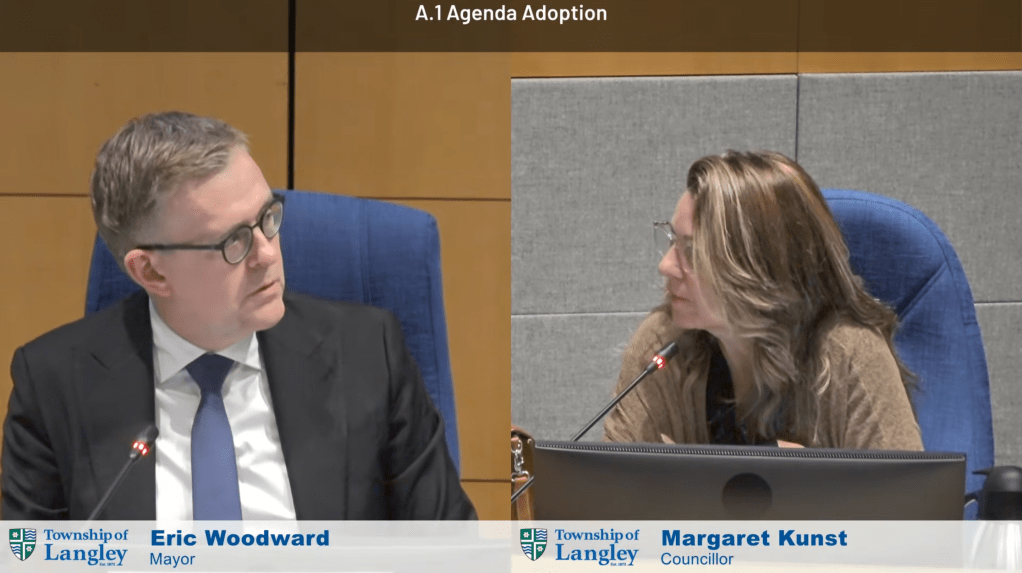
On May 10, 2025, the Township of Langley announced that it was now the sole owner and operator of the RCMP detachment building in Murrayville that used to be part of a shared policing agreement with the City of Langley. There were no fireworks or shared statements with the City. Just a sudden statement that one of the longest-running joint agreements to keep both municipalities safe had ended. The shared policing agreement between the City and Township dates back to 1993. Under the deal, each municipality contributes to the cost of RCMP services based on a formula tied to 75 percent crime statistics and 25 percent population data. It was not a perfect system, but it worked for three decades. It allowed both governments to share resources without duplicating costs.
Mayor Woodward tore up that arrangement. Shortly after the 2022 election, his council voted to explore withdrawing from the agreement. In May 2023, they voted unanimously to terminate the agreement and de-integrate the joint Langley RCMP detachment. The legal agreement required two years’ notice. That deadline arrived this Spring.
Woodward’s justification was fiscal prudence. He argued that the Township’s population had grown rapidly while the City’s had not, yet both continued to share services under a legacy formula, and that the Township wanted full control over its own service delivery. At a superficial glance, that sounds reasonable. Even Langley City Mayor Nathan Pachal, who opposed the split, acknowledged that the agreement could have been updated. His position was not that nothing should change, it was that the change did not mean throwing it all out the window. Mayor Pachal noted that “the Township of Langley has never approached the City to initiate discussion on changing the funding agreement.”
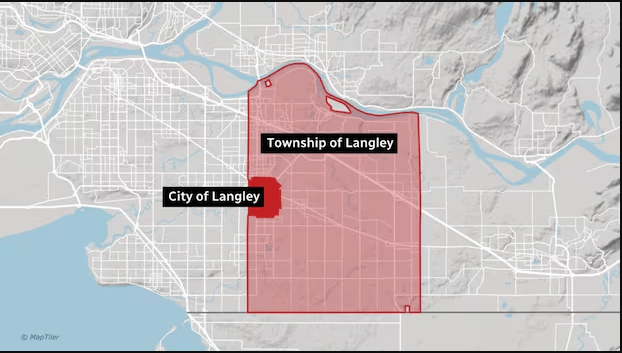
The City maintains that it has consistently paid its fair share. It points to the established funding formula and a police officer to population ratio that is better than national benchmarks. In 2022, Langley City paid for 51.9 RCMP members and received 51.35 in return, nearly one officer for every 559 residents, well above the one-to-seven-hundred guideline. The Township, by contrast, paid for 121.4 members that year and received 158.6. To put it simply, this system worked. In April 2024, Premier David Eby weighed in and urged both parties to reconsider, warning that a full split would cost taxpayers on both sides more. The Township acknowledged the letter and moved ahead anyway. According to the City, an RCMP assessment suggested that de-integrating the detachment would increase inefficiencies and require more municipal staff and police officers, driving up costs for both communities.
Now that the split is official, the financial and logistical consequences are starting to take shape. The Township owns the detachment building. The City pays rent. Administrative staff who once supported both jurisdictions now need to be tracked, billed, and divided. Eventually, the City will need its own detachment building. Until then, they will operate out of Township space on an interim basis. The RCMP still provides policing services to both communities, so service delivery has not changed. Taking a deeper look, though, this does not appear to be about money but about how this policing model works and what it costs. A single detachment provides shared infrastructure and operational efficiencies. Two detachments results in duplicated systems, offices, and overhead.
None of this was put to public consultation or vote. There was no referendum. No cost benefit analysis presented to taxpayers to assess. The decision was made at the council table and managed by staff. The community impacted by these services were not invited to the conversation. And that’s the part Langley residents are most concerned with. The RCMP split speaks to a broader pattern and modus operandi of unilateral decision-making without adequately involving the community at large.
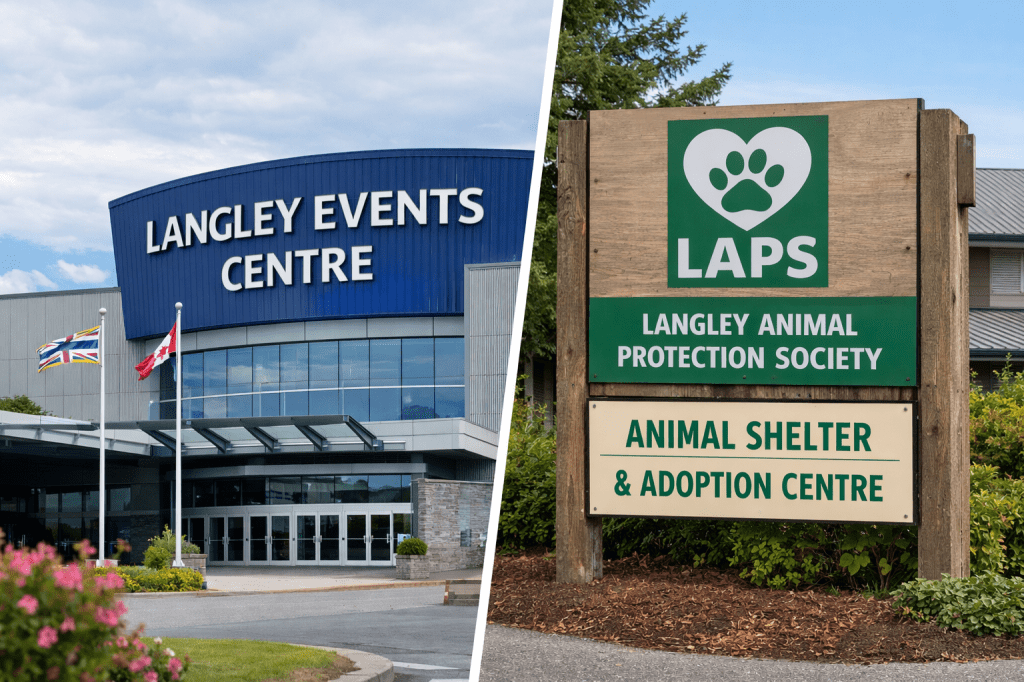
In 2024, the Township moved to strip the Langley Animal Protection Society (LAPS) of its enforcement role. Council passed a new animal control bylaw with no public hearing. LAPS was not meaningfully consulted, neither was the City. Also without similar consultation or input, in 2023 the Township dismissed fourteen senior staff and restructured departments, creating new director-level positions that reported directly to the Mayor instead of through the conventional administrative organization structure. This resulted in ballooning increases to payroll costs and a consolidation of power inside the Mayor’s office and raises a fair question: is Langley building smarter systems, or just building walls?
Township and City residents are neighbours, and in some cases, family. They live in the same neighbourhoods. They cross municipal boundaries every day without giving much thought to the distinctions between these two jurisdictions. The RCMP detachment shared by the Township and City was one of those quiet efficiencies that made life easier and more simple for the community at large. That benefit is gone now, and maybe for good reason. The way this long lasting relationship and connected system ended though says something about how local government is changing. What used to be negotiated is now abruptly announced. What used to be shared is now split. And what used to be an invitation to discuss now arrives by press release. Both municipalities will survive that shift, but they should not sleepwalk through it. Even if most residents will not notice a difference in service delivery today, they will one day wake up and find themselves on opposite sides of a boundary they did not wish to have drawn.



 The Langley Monitor
Leave a comment