
A growing movement is demanding provincial oversight of municipal spending. After years of no-bid contracts, severance payouts, and political pet projects, Langley Township may be the strongest case yet.
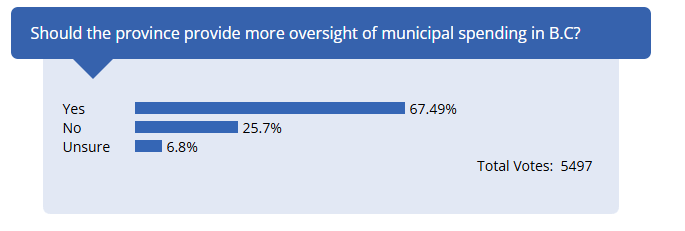
A recent Castanet poll asked a simple question: should the province do more to oversee municipal spending in British Columbia?
Over two-thirds of respondents said yes.
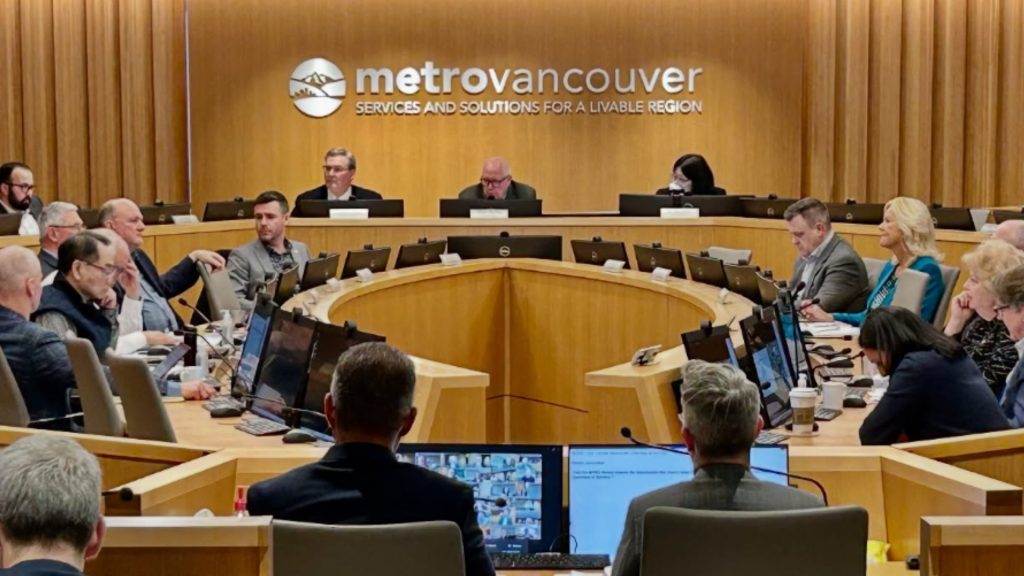
It’s a timely question. In Richmond, councillors cited media reports that more than $400,000 in gift cards were distributed by the City of Richmond over three years, with little oversight. The Richmond RCMP’s serious crime unit has since opened an investigation into the case. Meanwhile, in Metro Vancouver, a new governance analyst’s report points to serious transparency and accountability gaps in how the region’s decision-makers spend public money.
But while other cities are just now being called to account, residents in Langley Township might say: welcome to the club.
A petition now circulating in British Columbia calls on the province to take a more active role in monitoring and auditing how municipalities spend public funds. It cites recent examples like Richmond and Metro Vancouver, but Langley, with its swelling debt and patronage-laced projects, offers perhaps the most compelling case.
Under Mayor Eric Woodward’s leadership, Langley Township has approved a series of high-cost, low-competition spending decisions that illustrate exactly why British Columbians are calling for more oversight. When millions are spent with minimal transparency and limited public input, the case for provincial involvement becomes harder to ignore.
The Severance Surge
Since Woodward took office in 2022, fourteen senior staff have been dismissed, pushed out, or mysteriously retired. The price tag for their departure? Over $1.8 million.
That includes payouts like $497,994 for former Engineering GM Ramin Seifi and $345,733 for HR Director Shannon Harvey-Renner, who is reportedly still on payroll through the end of this year.
According to Township financial reports, the total wage bill increased by approximately 12.6 percent in 2023. That same year, residents faced a 6.9 percent increase in overall taxes, the highest in over a decade.
The Township hasn’t made much effort to explain the departures. What’s clear is that institutional knowledge was lost, public service costs went up, and taxpayers are footing the bill.
One Firetruck, No Bids
Then there’s the firetruck story.
In 2023, Langley Township council approved $11.5 million in firetruck purchases, without a single competitive bid. The supplier? A sole Western Canadian dealer. The sales rep? Mike Thomson, who just so happens to be a known political ally of Mayor Woodward.
Only one councillor, Kim Richter, voted against the deal. There was no formal tender, no public comparison of costs, and no clear rationale offered beyond “we like this brand.”
This kind of contract is exactly the reason many residents are calling for provincial oversight. When standard procedures like competitive bidding are sidestepped without clear justification, it raises the question: where else might corners be cut?
A Stadium-Sized Commitment
The LUSA soccer campus was one of Mayor Woodward’s central campaign promises. Since taking office, his council majority has fast-tracked the project through approvals and early funding. Phase 1 of the plan includes three new outdoor turf fields. Phase 2, not yet funded, is slated to include an enclosed indoor field and possible underground parking.
The $154.7 million project is the most expensive recreation investment in Township history. Its scale and speed have raised questions about priorities, especially as other infrastructure upgrades sit on the back burner. Critics of the project argue that public funds should be distributed based on transparent need assessments, not political alignment or visibility.
In the context of the growing petition for provincial oversight, projects like this one underscore why some believe municipalities need stronger rules for procurement, planning, and public consultation.
The timeline? Lightning-fast. The cost? Eye-popping. The main user group? Close political supporters of the mayor.
It’s the kind of pattern that doesn’t pass the sniff test, even if the paperwork technically clears.
Debt to Match the Drama
All of this spending comes at a cost.
Since Woodward’s term began, the Township has authorized nearly $500 million in new borrowing, pushing total approved debt to $685 million. With the Township population estimated at around 162,269 residents, that works out to more than $4,100 per resident. Councillors Kim Richter and Michael Pratt have repeatedly raised concerns about how the Township plans to repay what it’s borrowing. Answers have been vague. Public communication has been worse.
A Familiar Pattern
The broader takeaway is hard to ignore. When you look at the spending decisions in Langley, the severance cheques, the no-bid contracts, the debt, the favours for friends, you see the same problems that triggered outrage in Richmond and concern across Metro Vancouver.
The difference is, in Langley, it’s been happening for a while. And with little outside scrutiny.
Should there be tighter oversight of municipal spending in BC? The petition’s supporters think so. And after reading Langley’s track record, some residents might agree.
After all, we’ve already seen what happens when no one’s watching.
Coming soon: a closer look at how these payouts and projects are actually being funded, and why it matters.



 The Langley Monitor
Leave a comment